Follow Us

Subscribe here to have these blog posts sent directly to your inbox

Your email:

Posts by category

WAXIE Blog

Current Articles | RSS Feed RSS Feed

Matting's Role in Proper Floor Maintenance


Controlling dirt and debris will help maintain the look of floors

By Corinne Zudonyi, Editor, Trade Press Media - Housekeeping Solutions magazine and CleanLink.com

Entryway MattingMatting programs are the first step to achieving and maintaining a desired look of flooring, reducing frequency of stripping and finishing and saving on labor.

According to industry experts, mats that are properly placed and cared for will reduce the amount of outdoor contaminants that are tracked into a facility. That being said, every facility should have matting systems at every entrance and exit.

"Matting is the first line of defense for any floor maintenance program. Its purpose is to stop soil before it comes into contact with the floor," says Stan Hulin, industry consultant and president and CEO of Future Floor Technology Inc., in Gladstone, Ore.

According to industry experts, the average person will track more than one pound of dirt into a facility every week on their shoes. As this dirt is carried throughout the facility, it can grind into increasingly dull floor finishes and absorb into carpets, causing additional work for the custodial crew.

ISSA has reported that custodial departments will spend at least $600 a week in labor hours to remove just one pound of dirt. And Don Aslet, founder of Varsity Facility Services in Pocatello, Idaho, comments that proper matting alone can save approximately 200 labor hours per year.

"Facilities must have a great walk-off matting program that absorbs soil before it enters the building," Hulin adds. "Laying 25 feet of matting can effectively remove 95 percent or more of soil before damage can be done."

In order to achieve the best results from matting systems, it is important to address placement. Experts recommend stretching matting at least 10 to 15 feet into the facility, which will allow the average person to step up to four times on each foot before walking off, collecting as much material as possible. Mats should also span at least the width of the door to guarantee effectiveness.


WAXIE-Green Eco-Mats"Proper matting is the number one way to keep dirt off floors," says Larry Johnson, product manager for S. Freedman & Sons Inc., Landover Md. "Neglecting your matting is one thing you can not afford to do."

Even if departments take advantage of a matting rental programs — where for a regular fee, the mats are serviced by an outside entity — proper interim care is essential. Experts recommend vacuuming mats at least once a day and shaking them weekly to eliminate dust and debris between laundering. Pressure washing and extraction cleaning of mats on a regular basis is also a good practice. High-traffic areas might benefit from more frequent maintenance.

As important as it is to care for mats, it is equally important to care for the floors they cover. Mats do absorb large amounts of debris, but fine dirt particles can make their way through the mat onto the floors underneath, scratching and damaging the surfaces. Vacuuming mats will minimize the amount of particles that reach floors, but departments should also clear excess debris regularly.

When properly cared for, mats are effective at grabbing dirt and debris before it enters the facility, but they are not a have-all-end-all solution to maintaining beautiful floors.

"If you have an excellent daily maintenance program in place, you can achieve consistently beautiful results," says Sortino.

Source: CleanLink

click-here-to-view-waxieaposs-full-lin

Tips For Improving Indoor Air Quality


Minimize Chemical Pollutants

  • Inddor Air QualityAvoid smoking indoors. Tobacco smoke contains thousands of indoor pollutants at high concentrations.
  • Choose low-emitting products that have been third-party certified and labeled by reputable organizations such as GREEENGUARD, EcoLogo, Green Seal and the South Coast Air Quality Management District Clean Air Choices- Cleaner Certification.  Be wary of manufacturer claims of “no VOC”, “natural” or “alternative.”
  • Minimize the use of harsh cleaners, solvent-based cleaners or cleaners with strong fragrances.
  • Certain activities, such as paint stripping, hobby soldering or gluing, painting, sanding and rock polishing, may create high levels of pollution and should be performed outside.
  • Control car and appliance exhaust. Do not idle cars, lawnmowers or other engines in the garage, especially those that are attached to the house.

Keep it Clean

  • Buy machine washable bedding. Wash pillows, sheets and comforters weekly to reduce exposure to allergens, including dust mites.
  • Consider removing shoes at the door to minimize dust and dirt tracked in from the outdoors.
  • Place walk off mats at all entrances to your home.
  • Use CRI Seal of Approval or high efficiency particulate air (HEPA) vacuum cleaners with disposable bags and microfiber cloths for surface dust removal.

Control Moisture

  • Keep homes dry. Control relative humidity levels to less than 60 percent, using dehumidifiers if necessary. Clean humidifiers frequently.
  • Repair all leaks promptly.
  • If there has been a flood or water damage, take immediate action and remove the water and wet materials. Dry all porous materials and furnishings within 48 hours. If mold grows on any porous materials, such as drywall, ceiling tiles or wood, discard and replace.
  • Run bathroom exhaust fans while showering.
  • House plants can improve indoor air quality by filtering carbon dioxide; however, if they are over-watered, they can encourage mold growth.

Ensure Proper Ventilation

  • Open doors and windows when temperature and humidity levels permit. However, be mindful of outdoor allergens during spring and fall seasons.
  • Make sure that mechanical filters are in place, that they fit well and that they are changed periodically according to manufacturer’s instructions.
  • Use of home mechanical air systems, with good filtration, can control dust levels. Some additional air cleaners, such as electrostatic systems or ion generators, may be stand alone or part of the home system. If these additional air cleaners are used, make sure they are certified to UL 867 and are certified by the state of California for minimal ozone release.
  • Make sure that fuel burning furnaces, fireplaces, heaters, range tops, exhaust fans and other appliances are vented to the outside well away from windows and heating ventilation and air conditioning (HVAC) intakes.


WAXIE IAQ Solutions

WAXIE Sanitary Supply offers several solutions to provide assistance as you as you strive to minimize indoor air pollutants:

  • Ultra-low VOC and Third-Party Certified Cleaning Chemicals
  • CRI Seal of Approval Vacuum Cleaners
  • Microfiber
  click-here-to-view-waxieaposs-green-pa

Reference sites:
GREENGUARD: http://www.greenguard.org/en/consumers/consumers_tips.aspx

Need Cleaning Equipment To Clean Both Hard And Soft Floor Surfaces?


NSS SurgeThe NSS Surge CXC 1200 11-Gallon Dual Surface Cleaner provides the deep cleaning power of a truck mount extraction system at significantly less cost with the versatility of a portable unit that can be easily transported to your different job sites.

Tile and Grout Cleaning
The Surge CXC 1200 becomes a powerful tile and grout cleaning machine when used with the hard surface rotary tool. Two streams of 1200 PSI water turn the spray bar at 1400 RPM, providing consistent cleaning, even in the grout lines. The 1200 PSI streams quickly clean away the toughest soils from hard floors while the powerful vacuum shroud on the hard surface rotary tool suctions the dirty water back into the recovery tank. Two 0.75-in garden hose fittings allow for auto-fill and auto-dump of both the solution and recovery tanks.

NSS Surge Grout CleaningRestorative Carpet Cleaning
With the pressure regulator turned to 500 PSI and the carpet wand attached, the Surge CXC 1200 becomes a very powerful cold water restorative carpet extractor. Powerful dual vacuum motors provide 140” of waterlift. Productivity is increased and trips to the sink to fill or drain the machine are eliminated by the addition of two 0.75-in garden hose fittings that allow for auto-fill and auto-dump of the solution water.

NSS Surge WandPerformance and Features

  • The rotomolded polyethylene body resists dents and corrosion, translating to years of dependable service
  • A 500 – 1200 PSI Positive Displacement pump for quick cleaning of hard floors and deep cold restorative cleaning of carpets
  • A circuit locator indicates when the two cords are plugged into different circuits, preventing overloading of the building circuits.
  • At 75 dB A the NSS Surge has the power of an expensive truck mount extractor without the inhe3rent noise levels.
  • Clean hard floors or carpeting at 500 sq ft/hour.

gt-click-here-to-view-waxieaposs-201


Are You Looking For A Total Carpet Care Solution?


One machine does it all, faster.

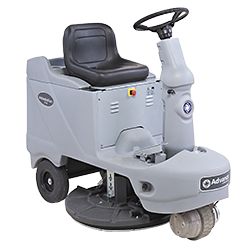
ADVANCE ES400The Advance ES4000 Total Carpet Care System offers complete versatility, from everyday carpet maintenance to deep restorative extraction.

You want productivity. 

Upgrade from a fleet of dedicated use carpet extractors to a single high efficiency rider that offers vastly more productivity, better equipment utilization and faster cleaning. Realize productivity improvements of up to 400% over walk-behind sweepers and extractors. Clean better and clean smarter while reducing your total cost of ownership.

You want flexibility. 

Only one machine offers the versatility to care for your carpeted surfaces according to your facility’s cleaning requirements. The Advance ES4000 lets you perform everything from daily touch ups of high traffic areas, to low-moisture cleaning, to periodic restorative extraction. All with complete control, simple, One-Touch™ operation and higher levels of productivity in one machine.

You want value.

Why maintain multiple machines to handle carpets when one capable machine can do it all? The ES4000 delivers value every day. Compare overall cost of ownership of the ES4000 with the carpet maintenance equipment you need now and you’ll find a Total Carpet Care solution.

PERFORMANCE & FEATURES

  • Cleans a 28 inch wide path; maneuverable through standard 36 inch doorways
  • Superior turning, visual and clearance ability. The ES4000 turns within a 63 inch (160 cm) radius
  • Dry Sweep Mode with vacuum suction, dust misting and two-stage filtration. Dust misting captures dust and eliminates the need for dust bags. Dry Sweep up to 35,000 sq. ft. per hour
  • Interim Mode allows cleaned carpet to be dry and ready for use in less than 30 minutes. Extract up to 14,000 sq. ft. per hour – a 400% improvement over walk-behind extractors
  • Pre-Treat Mode using any Green certified products from pre-spray to encapsulates. Pre-treat up to 21,000 sq. ft. per hour
  • Restorative Extraction Mode deep cleans carpet, up to 7,000 sq. ft. per hour
  • At just 65 dB A, the ES4000 is no louder than a person speaking; This makes daytime cleaning possible without disturbing facility occupants
  • Onboard detergent metering eliminates the need for pre-mixing solution and reduces chemical costs and environmental impact
  • Refillable cartridges are interchangeable with your choice of chemicals, including pre-spray, detergent, and encapsulates
  • The ES4000 Total Carpet Care System has received CRI-SOA certification
click-here-to-view-waxieaposs-full-lin

Looking for Safer Cleaning Chemicals? – Consider EPA DfE


What Is It?


EPA-DFEThe Design for the Environment (DfE) is the US EPA's label for safer chemical-based products. The DfE Safer Product Labeling Program advances EPA's mission to protect human health and the environment.  The program uses EPA's chemical expertise and resources to carefully evaluate products and to label only those that have met the program's highly protective Standard for Safer Cleaning Products and stringent safer ingredient criteria. 

How Does It Work?


By allowing use of the logo on products, EPA empowers consumers and commercial purchasers to select safer chemical products that do not sacrifice quality or performance and that are safer for people and the planet.  DfE labels a wide variety of chemical-based products, like all-purpose and specialty cleaners, laundry detergents, and carpet and floor care products.  In addition, DfE has teamed with the GreenBlue Institute to develop a CleanGredients database, which uses the DfE methodology and “green screen” to identify safer chemicals for cleaning products (you can see more at www.cleangredients.org).

What Does It Mean?

EPA allows safer products to carry the Design for the Environment (DfE) label.  This mark enables consumers to quickly identify and choose products that can help protect the environment and are safer for families.  When you see the DfE logo on a product it means that the DfE scientific review team has screened each ingredient for potential human health and environmental effects and that—based on currently available information, EPA predictive models, and expert judgment—the product contains only those ingredients that pose the least concern among chemicals in their class.  Product manufacturers who become DfE partners, and earn the right to display the DfE logo on recognized products, have invested heavily in research, development and reformulation to ensure that their ingredients and finished product line up on the green end of the health and environmental spectrum while maintaining or improving product performance.

Look for the Design for the Environment logo when you shop or procure products and join a national campaign to protect human and environmental health.

For more information about the EPA DfE Safer Product Labeling Program, visit www.epa.gov/dfe.
Download a copy of EPA’s DfE Standard for Safer Cleaning Products (SSCP) here.

WAXIE has a several cleaning chemicals that are formulated in partnership with the EPA DfE Program and that have earned the DfE label.

Messed Around and Got a Triple Double – All-Star Gym Floor Care


The Busy Life of a Gym Floor

Gym Floor CareWhat starts off the week with a student assembly, then moves on to PE class, volleyball practice, a wrestling meet, a basketball game, and then finishes off the week with a school dance?

Think we are talking about the busy schedule of your high school student?

Try the busy schedule of your local high school’s gym floor!


A Game Plan for Gym Floor Care
With all this activity, it is little wonder that proper gym floor maintenance becomes critical to keep the floors looking good, and to extend the life of the gym floor surface.

Just like the school’s basketball team needs to have a good game plan to win their game against their rival opponents, it is important for the custodial crew to have a good gym floor care maintenance game plan to win their battle against their rivals: dirt, grit and grime.

Daily Maintenance
An ounce of prevention is worth a pound of cure as the saying goes, and gym floor care maintenance is no exception.  It is important to have an effective daily maintenance routine.  

As the busy schedule described above demonstrates, most gym floors are used all day long, and often they are abused by street shoes, equipment, tables and chairs.  

The dirt and grit that is tracked onto the gym floor surface is very abrasive, and if not picked up daily, the gym floor will become dull and slippery.

Each gym schedule is unique, but a good rule of thumb is to dry mop the floor after each activity.  Keeping the dirt and grit off the floor will help to maintain gloss and traction.

At the end of each day, wet mop the floor to remove the sweat, soils, and spills that dry mopping can’t get to.  Wet mopping the gym floor to remove the daily grime will help to maintain the traction required to play basketball, volleyball and other sports.

Preventative Maintenance
To augment your daily cleaning procedures, here are some other preventative maintenance tips:

  • 
Place appropriate sized entryway matting in doorways to keep out dirt, grit and moisture (a good rule of thumb is to have 10’ feet of matting in the primary direction of travel)
  • 
Avoid excess moisture from leaks or overly wet mopping
  • 
Install felt pad protectors on tables and chairs to be used on gym floors (and/or utilize protective covering over gym floor for non-athletic events)

  • Replace HVAC filters often

Next: Periodic Maintenance and Product Application
Watch this space in the future for more information on gym floor care maintenance – including periodic maintenance and product application.


WAXIE Ultra Guard – The Next Generation in Gym Floor Care Solutions


The WAXIE Ultra Guard Premium Wood Floor Care Program will simplify your wood floor care maintenance program while simultaneously taking it to a level previously unavailable in our industry. WAXIE Sanitary Supply has combined the finest wood floor maintenance chemicals, pads and equipment to give you the Ultra Guard advantage.

waxie-ultra-guard2

Green Cleaning Trends to Watch in 2012


New Year, New Predictions
Green Cleaning TrendsThe beginning of each year is a natural time to take a quick look back and take inventory of what has happened in the preceding year, and then attempt to make some educated predictions for what might be expected to happen in the coming year.  And since sustainability remains such a vital topic of interest, it makes sense for us to identify some green cleaning trends to watch for in 2012.

While predicting what will happen in the future is obviously not an exact science, it is possible to pay attention to the market and observe emerging patterns and trends in order to make an informed prognostication.

Look into the Crystal Ball with the Ashkin Group
Stephen Ashkin, CEO of Sustainable Dashboard Tools, LLC, and President of The Ashkin Group, is an industry consultant who has just posted his “Annual Trends and Directions” on sustainability issues in several industry publications.


Ashkin, recognized as an industry expert on Green Cleaning, has been offering his annual trends and directions for several years.


“One prediction I am most proud of is when I stated about three years ago that I did not think the Green/sustainable movement would suffer significantly due to the economy,” he says. “And so far, that has proved to be the case.”


What to Watch for in 2012
So what does Ashkin foresee for 2012? Below are his ten predictions for the coming year:


1. It’s the economy. The economy will continue to be the focus, but many organizations will slowly start hiring and expanding. While conditions won’t return to pre-recession levels, it will be a better year for companies in the cleaning industry.


2. LEED shakes up the market. The new LEED revisions will be introduced in early 2012 and the improvements will accelerate its adoption. As facilities seek help understanding the changes, jansan distributors will continue to help customers.


3. Energy is king. The cost of energy will increase in 2012. Jansan distributors and service providers will develop strategies to help facilities reduce energy consumption.


4. Water conservation. Water will continue to emerge as a critical issue that we must address.


5. Green as a given. Facility managers/cleaning professionals will select Green cleaning products first and conventional cleaning products only if Green ones are not available.


6. Measuring sustainability. As facilities and businesses increasingly operate in a more sustainable manner, they will turn to “dashboard” systems to help measure, manage, and report progress.

7. Proof of sustainability. Purchasing departments requiring vendors to document how they address sustainability issues within their own businesses will become more commonplace.

8. Ingredient disclosure. Chemical manufacturers will provide more information on the ingredients used to manufacture their products as more purchasers and consumers demand this information.

9. Collaboration. Instead of doing it alone, more jansan distributors and service providers will collaborate, creating solutions for environmental issues that will eventually help the entire industry.


10. Showing how. More facilities and businesses will establish Green and sustainability policies, but will have trouble putting them into practice. Jansan distributors and service providers will play a key role in showing them how.

More information about author of this list can be found at www.ashkingroup.com

GPS from WAXIE
While all of these predictions may or may not come to pass, one thing that is certain is that WAXIE will continue to help customers achieve their green cleaning goals in 2012 with the GPS® Green Partner Support™ Program.

For more information about GPS, please see www.waxie.com/green

Cleanlink: 2012 Green and Sustainable Trends

Sustainable Facility: Ashkin's 2012 Green and Sustainable Trends

gps_cta

Social Marketing for Hand Hygiene


Social Marketing for Hand Hygiene

By Jane Kirk MSN, RN, CIC, Clinical Manager

Infection Preventionists have been creating and posting signs to remind healthcare workers to clean their hands for over a decade. And yet, in spite of their efforts, the CDC reported in May 2010 that hand hygiene compliance remains at 40% as previous reports from 2002.1

Hand HygieneA recent study of social marketing and behavioral change suggest that behavioral nonadherance resulting from lack of opportunity (such as insufficient time, interference with patient care activities, or inaccessible hand sinks) or lack of ability (inadequate knowledge of hand hygiene technique) or lack of attractiveness (skin irritation from hand washing) can be better addressed by social marketing than by education or policy alone.2

Social marketing applied to hand hygiene behavior can be defined as enabling a change leader such as an Infection Control professional to be effective persuading an audience of healthcare workers to adopt a desired behavior that benefits the organization and its stakeholders (patients).3 This concept surpasses advertising and studies the audience (or HCW’s) perspective of the benefits of performing hand hygiene (feeling clean, feeling safe, or feeling trusted by the patient) and the barriers to performing hand hygiene (lack of knowledge when to clean hands, availability of hand hygiene products). The sources of social pressure to perform (from patients, peers, or management) and the availability of competitive choices (not performing the behavior or using gloves inappropriately) are also considered.4

There are many approaches to social marketing and one is signage. Many infection Preventionists seize the opportunity for creativity by keeping hand hygiene in the HCWs thoughts through monthly signs with a catchy phrase or jingle for hand hygiene. Some use the holidays and seasons as the theme behind the message. Some use employee champions in the photos to inspire other HCWs. As an Infection Preventionist reported, “we are entertaining them into compliance instead of nagging hand hygiene participants.”5

Sometimes Infection Preventionists do not have time to create signs and messages promoting hand hygiene. In a study done by the Center for Disease Control and Prevention (CDC) in Atlanta, Georgia, USA, it was determined that “prepackaged educational tools have been shown to be effective in part because they can facilitate implementation of interventions locally by ICPs. Prepackaged tools allow ICPs to include local data and implement the tools most appropriate for their institution and for the time they have to spend.”6

Whether prepackaged or created within the healthcare organization, it is important to frequently change signage so that it doesn’t become ignored. Using a social marketing approach in Vancouver, Canada, the Clean Hands for Life™ campaign used 10 posters and rotated them every 4-6 weeks during the year. They engaged staff by holding poster contests where the staff created and submitted posters.7

When developing promotional messages and media, social marketers utilize insights from the psychology of perception. Messages are more effective when framed in terms of benefits (gains) rather than costs (losses), and print advertising should conform to the principles of effective communication.8

Promoting hand hygiene in healthcare through social marketing can be viewed as a valuable technology for behavior change because it complements education and policy. Using signs as part of a multifaceted campaign can be an effective way to improve hand hygiene compliance and ultimately decrease healthcare associated infections and yield better outcomes for our patients.


1. Ellingson, K. May 4, 2010 Center for Disease Control and Prevention Presentation New Frontiers in Hand Hygiene Promotion & Measurement

2,8. Mah, M.W., Deshpande, S. & Rothschild, M.L. (2006). Social marketing: A behavior change technology for Infection Control. American Journal of Infection Control.34(7) 452-457.


3,4. Doell, L. (2004 ). Is it all in the advertising? American Journal of Infection Control. 32(3) E56.

5,7. Forrester, L.A., Bryce, E.A., Mediaa, A.K.. (2008). Clean Hands for Life™: Results of a regional hand hygiene campaign. American Journal of Infection Control 36(5) E70 pub8-65.

6. Lawton, R.M., Turon, T., Cochran, R.L., Cardo, D. (2006). Prepackaged hand hygiene educational tools facilitate implementation. American Journal of Infection Control. 34(3). 152-154.

Source: http://www.gojo.com/united-states/market/veterans-affairs/resources/hand-hygiene-times/vol3-issue5-know.aspx

Pdf: http://www.gojo.com/united-states/market/veterans-affairs/resources/hand-hygiene-times/~/media/1BA250B790A0476499528155733DF1B4.ashx

hand-hygiene_cta

WARNING!!! Year-End Tax Savings for Purchasing Cleaning Equipment


floor cleaning equipmentTemporary Law Means HUGE Savings

The Tax Relief, Unemployment Insurance Reauthorization and Job Creation Act of 2010 (TRJA) extended and expanded the depreciation bonus created in 2008.

For 2011, businesses that purchase qualified assets and put them in service by December 31, 2011 are eligible to receive an unprecedented 100 percent first year depreciation of the asset cost; for 2012, the depreciation allowance is expected to decrease to 50 percent.


What Kind of Savings?


Assume you buy and place in service in 2011 a new NSS Champ 2929 ride-on scrubber costing $15,641. Using bonus depreciation, you can “write off” the full amount this year, reducing your taxable income by $15,641. If you’re in the 35 percent tax bracket, that can reduce your 2011 tax bill by $5,474.


Things To Keep In Mind


Here are some important things to remember:

  • To qualify for bonus depreciation, the equipment must be new.
  • The equipment has to be placed in service in the year in which you claim the bonus (2011 for 100 percent and 2012 for 50 percent)
  • The equipment must be depreciable under MACRS and have a depreciation recovery period of 20 years or less.

ride-on floor cleaning equipmentThe Fine Print

This information should not be construed as tax advice or as a promise of potential tax savings or reduced tax liability. For complete information regarding the Bonus Depreciation bonus, contact your tax professional or log on to the following sites:
www.irs.gov
www.depreciationbonus.org
www.youtube.com/watch?v=zBpFyJVPTcE

 WAXIE – Your Source For Cleaning Equipment


WAXIE offers commercial floor cleaning equipment for a variety of applications. Contact our WAXIE Equipment Specialists at (800) 995-4466 to review your cleaning needs.
Schedule a demo today while you can still enjoy these savings in 2011!

click-here-to-view-waxieaposs-machines

Biobased Cleaning Products Offer Alternative Worth Considering


biobasedWhat is “biobased”?

According to the USDA BioPreferred® program, a biobased product is “one that is composed, in whole or significant part, of biological products or renewable agricultural materials (including plant, animal, and marine materials) or forestry materials.”


What is a biobased product?


Biobased products fall into three broad categories: biochemicals (such as cleaning surfactants), biomaterials (such as plastics and laminates) and biofuels (such as biodiesel).


Why would a biobased product be selected?


Biobased cleaning products help to reduce dependence on imported oil, are considered to be more helpful to the US economy in general and the rural economy in particular, and are typically healthier for people and the environment than petroleum-based alternatives.


How can a biobased product be identified?

The USDA (US Department of Agriculture) has initiated a “USDA Certified Biobased Product” label to help identify products that are made from biobased materials, and the Farm Security and Rural Investment Act (FSRIA) of 2002 (also referred to as the Farm Bill) requires federal agencies to purchase biobased products when reasonably available, reasonably priced, and comparable in performance.  
For more information, visit www.biopreferred.gov.


WAXIE-Green


WAXIE has several cleaning product & hand hygiene options that are made from biobased materials.

GPS® Green Partner Support™

WAXIE has LEED Accredited Professionals on staff and offers GPS Green Partner Support to their customers interested in implementing a Green Cleaning Program for LEED (and “like LEED”) projects – call your local Sanitary Maintenance Consultant to start the journey toward meeting your green cleaning goals!
www.waxie.com/green

gps_cta

All Posts